


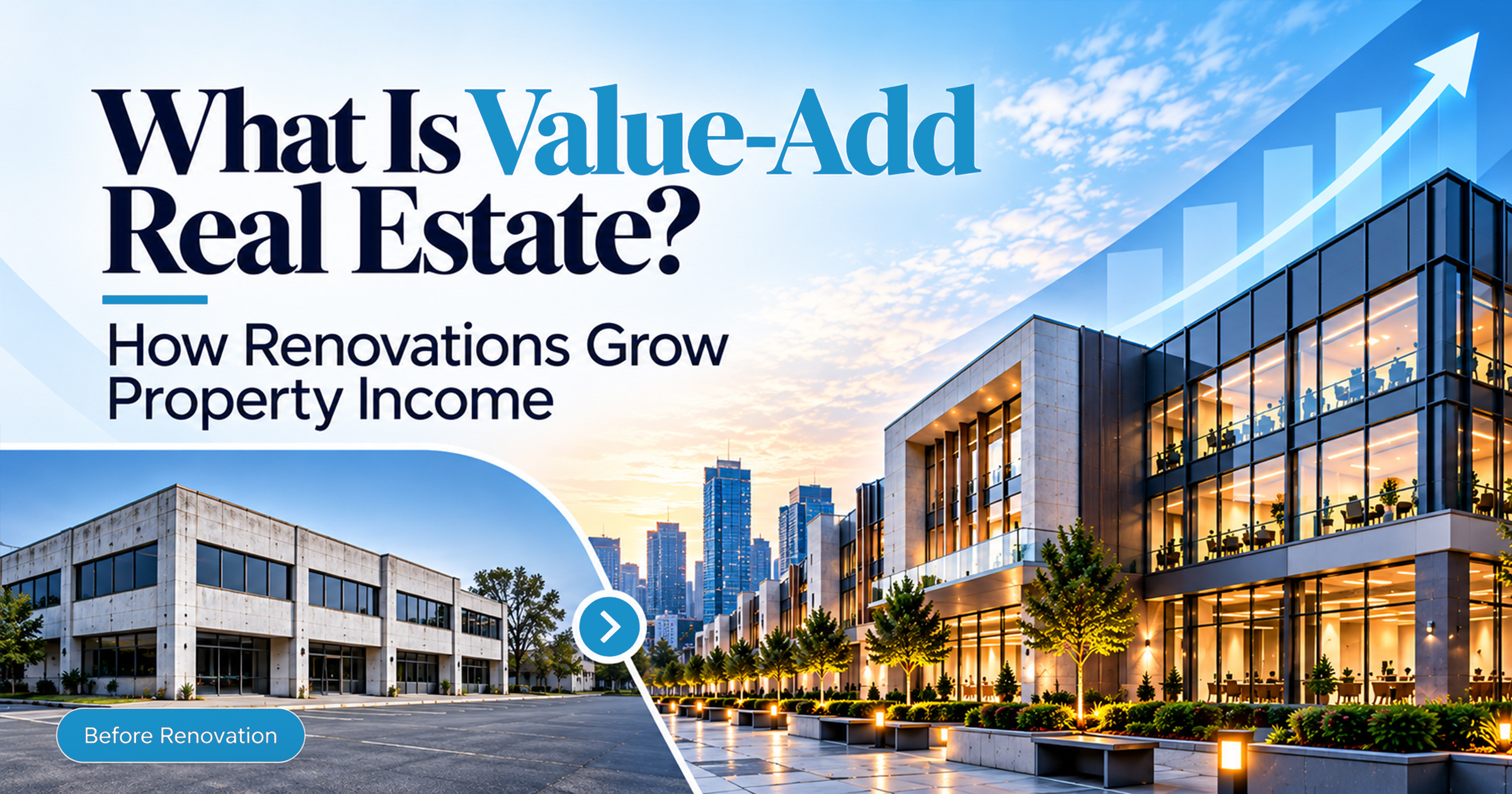
A property doesn't always need to be newly built to become more valuable. Sometimes, an older hotel, residential community, or commercial building already has the location and underlying demand it needs. What it lacks is modern facilities, efficient operations, or the improvements necessary to attract more customers and generate stronger income.
That's where value add real estate comes in.
Value-add real estate is a property ownership strategy focused on improving an existing property to increase its income, operational performance, and potential market value. Those improvements might include renovating outdated rooms, upgrading shared amenities, reducing operating costs, or repositioning a property for a different customer segment.
For property owners, the opportunity is straightforward: improve what already exists rather than build everything from scratch. The challenge is understanding which improvements create measurable financial value and how to carry them out effectively.
This guide explains how value-add properties work, why renovations can increase rental income, how professionals evaluate improvement opportunities, and how platforms such as Vairt make professionally managed real estate ownership more accessible.
Can Property Improvements Create New Real Estate Opportunities? Schedule a 15-minute meeting with Vairt to discuss professionally managed real estate opportunities and value-add property strategies.

Value add real estate refers to an existing property that has the potential to generate more income or become more valuable through targeted physical improvements, operational changes, or market repositioning.
Unlike a property that is already operating at its expected level, a value-add property may have outdated interiors, underused space, below-market rents, inefficient management practices, or amenities that no longer meet customer expectations.
By addressing these limitations, property owners aim to improve performance while increasing the property's long-term appeal.
For example, consider an older hotel located near a busy business district. The hotel may attract regular visitors because of its location, but outdated rooms and limited amenities could prevent it from achieving competitive room rates. Renovating guest rooms, improving common areas, and strengthening operations could make the property more attractive to travelers and support higher revenue.
The same principle applies to residential buildings, office spaces, and mixed-use developments. The objective is not simply to spend money on renovations. It is to make improvements that produce a meaningful economic benefit.
Anyone considering this approach should understand how to evaluate an income-producing property opportunity, including the relationship between property income, operating expenses, and improvement costs.
Renovations can increase property income by helping owners attract more tenants or guests, support competitive pricing, improve occupancy, reduce maintenance expenses, and make better use of available space.
However, not every renovation produces the same financial result. Successful value-add projects focus on improvements that address a specific operational or market need.
One of the most common objectives of a value-add real estate strategy is increasing rental income.
Older properties may charge lower rents because their condition, amenities, or layout are less competitive than nearby alternatives. When those limitations are addressed, the property may be able to command stronger pricing.
In residential real estate, this could mean updating kitchens, bathrooms, flooring, and shared amenities. For hotels, it could involve refreshing guest rooms, upgrading conference facilities, or improving the arrival experience.
The financial benefit depends on whether the market supports higher pricing after renovations. Owners need to consider comparable properties, local demand, and the preferences of prospective tenants or guests.
Renovations can also improve property income by making a building more attractive to potential occupants.
A residential community with outdated facilities may experience longer vacancies or difficulty retaining residents. Modernizing its amenities, improving safety features, and enhancing maintenance standards may help it compete more effectively.
For hospitality properties, updated interiors and a stronger guest experience may support bookings, repeat visits, and occupancy performance.
Higher occupancy creates more opportunities to generate revenue from an existing property without expanding its physical footprint.
Value-add improvements aren't limited to appearance.
Replacing inefficient heating and cooling systems, installing energy-efficient lighting, upgrading water infrastructure, and improving preventive maintenance can reduce recurring property expenses.
Those savings matter because property value is influenced not only by how much revenue a building generates, but also by how much income remains after operating costs.
For property owners, the goal is to improve operating efficiency while maintaining the quality of the experience for tenants, guests, or commercial occupants.
Some properties contain areas that generate little or no income.
A hotel may have an underused meeting room that could be redesigned for events. A commercial building may have vacant office floors that could be repositioned to accommodate changing tenant needs. A residential development may have recreational space that could be improved to support stronger demand.
These changes can create additional revenue opportunities without requiring the construction of an entirely new property.
The key is identifying a practical use that matches local market demand and complies with applicable property requirements.
Value add real estate can increase property value by improving its net operating income, commonly called NOI.
NOI is the revenue a property generates after paying regular operating expenses, but before financing costs and certain other deductions.
For many income-producing commercial properties, buyers and valuators use NOI alongside market capitalization rates to assess property value.
A capitalization rate, or cap rate, measures the relationship between a property's annual NOI and its value.
For a simplified illustration, consider a commercial property with annual NOI of $400,000. At an assumed market cap rate of 8%, its indicated value would be approximately $5 million.
If targeted renovations and operating improvements increase annual NOI to $500,000, the indicated property value at that same cap rate would become approximately $6.25 million.
Not every property ownership opportunity requires renovation.
Some properties are already renovated and operating with established income patterns. Others offer the potential for improvement, while development projects involve creating a new property or undertaking substantial construction.
Understanding these differences helps property owners select opportunities that match their financial goals and preferred level of involvement.
|
Property strategy |
Main characteristics |
Primary focus |
|
Stabilized or renovated |
Existing operations with established facilities |
Maintaining occupancy, income, and operating performance |
|
Value-add |
Existing property with identifiable improvement potential |
Increasing income through renovations and operational changes |
|
Development |
New construction or major redevelopment |
Creating and establishing a new income-producing property |
A stabilized hotel may already have renovated rooms, established management, and existing customer demand. A value-add hotel may require upgrades before it can reach its intended revenue potential.
Development properties generally follow a different process, involving planning, approvals, construction, and eventual operational stabilization.
These distinctions are useful when considering the different types of income-generating properties available in the United States.
A successful value-add real estate project starts with a clear understanding of the property's current performance and a realistic plan for improvement.
The first consideration is location. Renovating a property can improve its competitiveness, but physical upgrades alone cannot create demand where there is little underlying need for the property. Local employment, population trends, transportation access, competing properties, and customer preferences all influence the opportunity.
The second consideration is the renovation scope. An effective improvement plan identifies which upgrades are necessary, what they are expected to cost, how long they may take, and how each improvement could affect property performance.
A third consideration is operational management. Even a well-renovated property needs appropriate pricing, maintenance, marketing, tenant or guest services, and cost management to achieve sustainable income growth.
Finally, property owners need to account for renovation timelines, local construction conditions, and the possibility that income improvements may take time to materialize.
This is why professional property screening and independent valuation are especially important.
Vairt describes a property review process supported by a proprietary 100-point screening tool and third-party valuation. This approach gives participants a structured way to review real estate opportunities before making an ownership decision.

Yes. Professionally managed fractional property ownership allows participants to hold a proportional ownership interest in a property while professional teams manage its day-to-day operations.
Traditionally, owning a value-add property independently means sourcing the building, arranging financing, hiring contractors, supervising renovations, coordinating property management, and monitoring ongoing expenses.
This can require significant capital, specialist knowledge, and substantial time.
A professionally managed ownership structure offers another approach. Instead of purchasing an entire building, participants can own shares of a legal entity that holds a specific property.
Through Vairt, participants can explore U.S. real estate opportunities, review the available property information, and select an ownership amount that meets the listing requirements.
Vairt's How It Works process explains how property screening, funding, legal ownership, ongoing management, and income distributions fit together.
Once a Vairt property is fully funded, the property is held in its own limited liability company, or LLC. An LLC is a legal entity that can own real estate and define the ownership rights of its members.
The property-specific LLC is divided into one million shares, allocated in proportion to each participant's contribution. The LLC holds the property, while participants hold shares in the entity.
Professional teams handle property operations, including maintenance and occupancy management. Depending on the property, the improvement plan may also involve renovations or repositioning.
Participants can monitor their property through Vairt's digital dashboard and mobile application, rather than taking responsibility for everyday operations themselves.
This is what passive ownership means in practical terms: owners are not required to personally manage the property, although income and value still depend on property performance.
Those who want to review the ownership structure and available property information can create a Vairt account, which takes a few minutes and unlocks full property details.
Real estate examples make it easier to understand how property improvements can support income generation and long-term value.
Vairt's U.S. marketplace includes properties at different stages, from renovated hospitality assets to residential communities and hotels with value-add plans.
V Resort Living is a resort-style residential community in Sheridan, Illinois, featuring 332 residences across approximately 165 acres.
The property represents a value-add real estate opportunity because its plan involves renovating and repositioning an existing community to improve its appeal and operational performance.
For a property of this scale, improvements may influence how residents experience the community, how effectively amenities are utilized, and how the property competes within its market.
The important factors for participants to review include the proposed renovation scope, completion schedule, operating plan, expected demand, and property-specific financial projections.
The Econo Lodge Inn & Suites in Triadelphia, West Virginia, is a 113-room hospitality property with a value-add plan.
Located near Interstate 70, the property serves a market that includes regional travelers, business visitors, and guests visiting nearby attractions.
Its improvement strategy illustrates how an existing hotel can be evaluated for renovations and operational repositioning rather than requiring an entirely new building.
For this type of property, room condition, guest experience, competitive room pricing, occupancy, and operating efficiency are important factors in determining whether an improvement plan can support stronger financial performance.
The Four Points by Sheraton in Downtown Peoria provides a useful comparison because it is a renovated property rather than an early-stage value-add project.
Located at 500 Hamilton Boulevard in Peoria, Illinois, this 323-room full-service Marriott-branded hotel underwent a $40 million renovation completed in 2020.
The property serves corporate, business, and event-related hospitality demand. Its listing on Vairt shows projected annual rental income of 7%–9% during years one through five, with monthly distributions. These figures are projections rather than guaranteed income.
The property's renovation history demonstrates the scale of improvements sometimes undertaken to reposition a hospitality asset.
It also highlights the distinction between participating in a property with an established renovation history and one where major improvements are still planned.
Vairt also features a commercial office and parking property in Downtown Peoria, located at 222 NE Monroe Street.
The property includes approximately 68,360 square feet of office space and a seven-story parking structure with roughly 552 parking spaces. The combined property comprises approximately 272,876 square feet.
This asset illustrates how commercial property income can come from multiple operating activities, including office leasing and parking operations.
Vairt lists projected annual rental income of 8%–10% during years one through five, with monthly distributions. Actual income depends on operating performance, occupancy, expenses, and market conditions.
For readers comparing different real estate strategies, the combination of hotel, office, parking, and residential properties demonstrates why property type and development stage matter when selecting an ownership opportunity.
You can explore Vairt's current U.S. property opportunities to review available listings and their individual ownership requirements.
Not sure whether a value-add property or a renovated, income-producing asset is a better fit for your goals?
Schedule a free 15-minute call with Vairt to discuss property strategies, ownership structures, and the factors to review before selecting an opportunity.
Before participating in a value-add real estate opportunity, understanding the underlying improvement plan is essential.
Start by examining the property's existing condition. A well-located building with outdated interiors can present a different opportunity from a property that needs substantial structural or infrastructure work.
Next, consider whether the proposed improvements match local customer demand. Renovating hotel rooms may support higher nightly pricing when nearby hotels are already achieving stronger rates. Similarly, updated residential facilities may help attract tenants if those amenities are valued within the local rental market.
Renovation timelines also matter. Certain improvements may require phased construction, temporary room closures, or periods of reduced availability. These factors can affect income during the improvement period.
Operating expenses deserve equal attention. A project that increases gross revenue but also creates substantial maintenance, staffing, or management costs may not improve net income as expected.
Property owners should also understand the projected holding period and available exit options. Real estate appreciation, meaning an increase in property value over time, is generally realized through a property sale or another qualifying transaction.
Liquidity refers to how readily an ownership interest can be converted into cash. Private property ownership interests are generally less liquid than publicly traded assets, making it important to understand the applicable terms.
Vairt's existing guide to partial property ownership through real estate platforms explains how legal ownership, distributions, management, and exit arrangements work within its model.
Income from value-add real estate comes from the property's underlying business activities.
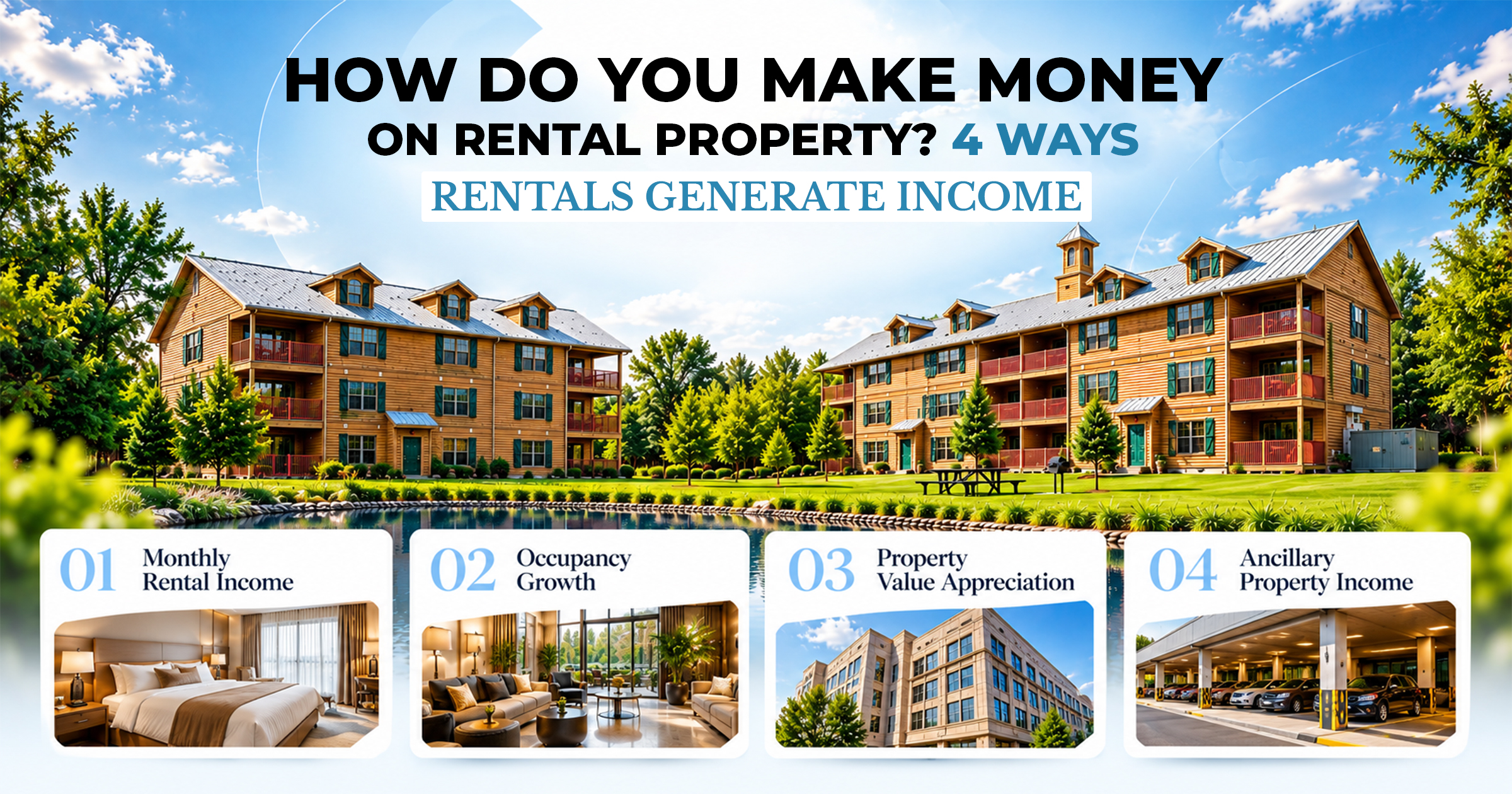
For residential properties, it generally originates from tenant rent. Hotels generate revenue from room bookings and potentially additional services. Commercial properties may generate income through office leases, parking operations, or other permitted uses.
Renovations are intended to improve these activities by increasing customer demand, supporting competitive pricing, or reducing expenses.
Property revenue is not the same as distributable income. Operating expenses, maintenance, taxes, insurance, financing costs where applicable, and other property obligations must be considered before determining how much may be available to owners.
Through Vairt's ownership model, distributable rental income is paid monthly into each owner's digital wallet, where it may be withdrawn or reinvested.
The amount distributed depends on the property's actual performance and the applicable ownership terms. Income is not guaranteed, and results depend on occupancy, expenses, market conditions, and, for value-add properties, renovation progress.
Readers interested in understanding this further can explore how professionally managed commercial real estate can generate potential passive income.
Vairt offers professionally managed fractional ownership in U.S. real estate, allowing eligible participants to hold proportional shares in property-specific LLCs.
Current listings show minimum participation amounts starting at $25,000, although eligibility and terms vary by property. Some opportunities are restricted to particular participant categories, so the requirements on each listing should always be reviewed.
Properties are offered through a 30-day funding process, with participant funds held in escrow. If a property is not fully funded within the applicable period, committed amounts are returned to the participant's digital wallet at no cost.
Once funded, professional management teams handle ongoing property operations, while participants can monitor performance digitally.
Vairt generally uses a five-year holding period. A 90-day exit option is described by the platform, and participants may also have options involving a secondary market or a vote among owners to sell the property. These are options rather than guarantees of liquidity, and the specific terms should be reviewed carefully.
The company's approach emphasizes property screening, structured ownership, professional management, and access to property information. Readers interested in its background can learn more through Vairt and its official website, Vairt.com.
Value add real estate is about recognizing the potential in an existing property and improving the factors that determine its income and market value.
Renovations, operational improvements, stronger occupancy, and more efficient property management can create opportunities for long-term growth. The results depend on whether the improvement plan is practical, financially justified, and aligned with local demand.
For people who want to participate without managing properties themselves, professionally managed fractional ownership provides another way to explore this strategy.
Vairt allows eligible participants to compare value-add properties with renovated and stabilized opportunities while reviewing the ownership structure, property details, and expected holding period.
Before choosing a property, review its operating history, improvement plans, projected income, eligibility requirements, and exit terms.
To take the next step, create your Vairt account and explore the available U.S. property ownership opportunities in greater detail.
Value add real estate is a strategy focused on improving an existing property's physical condition or operational performance to increase its income and potential market value. Common improvements include renovations, amenity upgrades, reduced operating expenses, and better use of available space. The objective is to create measurable financial improvement through deliberate changes rather than depending entirely on general property price appreciation.
Renovations can increase real estate value by supporting higher rental rates, improving occupancy, attracting tenants or guests, and reducing operating expenses. For income-producing commercial properties, these changes may increase net operating income, which influences property valuation. The final impact depends on renovation costs, market demand, cap rates, and whether the improvements generate sustainable financial benefits.
A value-add property generally requires renovations, management improvements, or repositioning to reach its intended operating potential. A stabilized property is typically operating with established facilities, occupancy patterns, and income history. Value-add ownership focuses on improving future performance, while stabilized ownership generally emphasizes maintaining existing operations and income. Both approaches require reviewing the property's financial condition and ownership terms.
Yes. Professionally managed fractional ownership allows eligible participants to own shares in a legal entity holding a specific property while management teams oversee day-to-day operations. Through Vairt, participants hold proportional shares in a property-specific LLC rather than independently purchasing and managing an entire building. Property management and renovation coordination are handled through the professional operating structure, subject to the property's particular arrangements.
The amount depends on the property and ownership structure. Purchasing an entire commercial or residential property independently may require substantial capital for acquisition, financing, improvements, and reserves. Fractional ownership can provide a different entry point. Current Vairt listings show a $25,000 minimum, although eligible participant categories and terms may vary. The property listing should be reviewed before committing funds.
The timeline depends on the property's condition, renovation scope, construction schedule, and ability to attract tenants or guests. Some properties may continue generating income during phased improvements, while others may require a longer stabilization period. Renovation completion does not automatically mean the property has reached its intended performance level. Participants should review the proposed schedule, occupancy assumptions, operating costs, and expected income distributions for each opportunity.
No. Income from value add real estate depends on actual property performance, including occupancy, rental pricing, operating expenses, and local market conditions. Renovation or construction timelines may also influence when improvements produce financial benefits. Projections help participants evaluate potential outcomes, but they are not guarantees. Reviewing property documents, the management plan, holding period, and ownership terms supports a more informed decision.

I'm Muhammad Waqas, a real estate content writer at Vairt with 8 years of experience writing about property ownership and real estate. I cover topics such as fractional real estate, hotel and commercial property ownership, and how to evaluate income-producing properties. My writing focuses on helping U.S. readers understand how professionally managed real estate works, including its benefits, risks, and structure, before they explore an opportunity.

Certain statements contained in this document constitute forward-looking statements. Such forward-looking statements, including our intended actions and performance objectives, projections, targets, estimates, or forecasts involve known and unknown risks, uncertainties and other important factors, including our ability to successfully develop and operate the Vairt Marketplace, our business model and the services we intend to offer. These factors are based on expectations and assumptions that may change and are subject to regulatory uncertainty, changes in our legal environment and the blockchain and real estate industries generally, which could cause our actual results, performance or achievements to differ materially from any future results, performance or achievements expressed or implied by such forward-looking statements. All amounts, numbers, ranges, and values presented in this document are subject to material change and should be taken as preliminary and indicative only. Any such amounts, numbers, ranges, and values are based upon preliminary estimates, remain subject to ongoing analysis and may change materially. All forward-looking statements in this document speak only as of the date hereof. We expressly disclaim any obligation to update any forward-looking statement to reflect any change in our expectation or any change in events, conditions, assumptions or circumstances.



Comments