

.jpg)
Rental property has helped millions of Americans build income and long-term wealth. But if you’ve never owned one, it’s not always clear where the money actually comes from. Is it just the rent? What about the mortgage, repairs, and vacant months?
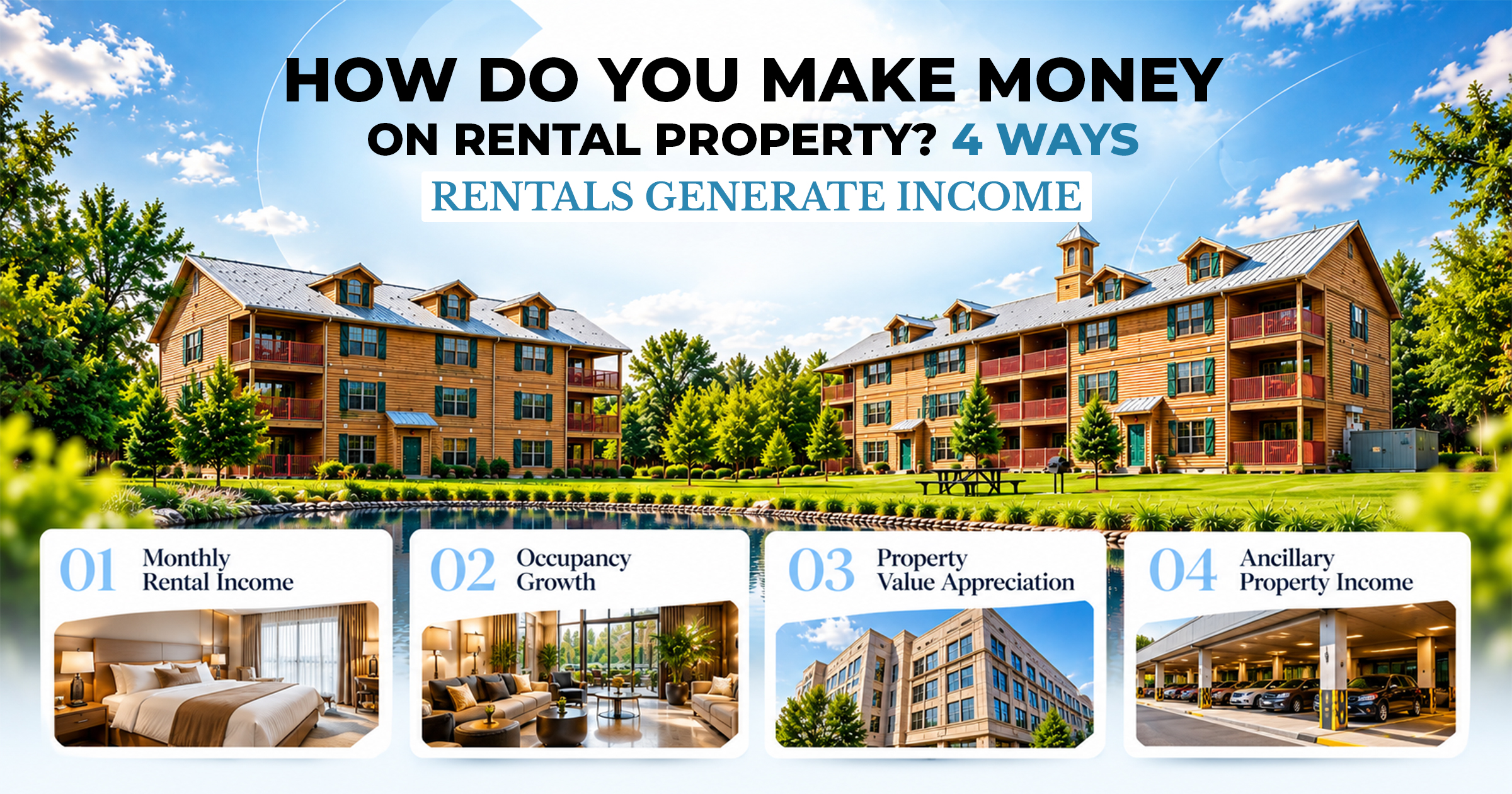
So how do you make money on rental property? Rentals typically earn money in four ways: monthly cash flow from rent, appreciation in the property’s value, equity built as the loan is paid down, and tax benefits. Each one works differently, and together they explain why real estate remains so popular.
This guide breaks down all four, walks through a simple cash flow example, and explains how professionally managed ownership through platforms like Vairt lets you earn monthly rental income from hotels and commercial buildings without taking on the work of being a landlord.
You make money on rental property through four main sources: cash flow, which is the rent left after expenses; appreciation, which is the increase in the property’s value over time; equity buildup, which grows as tenants’ rent helps pay down the loan; and tax benefits, such as deductions for depreciation and operating expenses.
Most owners rely on a combination of these. Cash flow provides income along the way, often monthly, while appreciation and equity buildup are usually realized when the property is sold or refinanced. Here’s how each one works.
Interested in Rental Property Opportunities? Schedule a 15-minute meeting with the Vairt team to discuss property opportunities and potential income sources.
Cash flow is the most direct way to make money on rental property. It’s the money left over each month after rent comes in and all the property’s costs are paid. When rent covers the mortgage, taxes, insurance, maintenance, and management with money to spare, the property has positive cash flow.
A simple, hypothetical example shows how this works. Imagine a rental home that brings in $2,000 a month in rent. The owner pays $1,200 toward the mortgage, $300 for property taxes and insurance, $200 set aside for maintenance and repairs, and $160 for property management. That leaves $140 a month in cash flow, or about $1,680 a year.
That example also shows why careful planning matters. The difference between rent and expenses can be narrow for a single rental home, so owners pay close attention to rent levels, financing costs, and operating expenses. Larger properties, like hotels and office buildings, often have more income sources and professional management teams that work to keep occupancy high and operations running smoothly.
Appreciation is the increase in a property’s market value over time. If you buy a property today and its value rises over the years, you capture that growth when you sell. For many owners, appreciation is where a large share of their long-term gain comes from.
Some appreciation comes from the broader market, as demand, local job growth, and limited supply push property values higher. Owners can also create value through improvements. Renovating units, upgrading amenities, or repositioning a property can increase both the rent it earns and what it’s worth. This is often called a value-add approach, and it’s common with commercial and hospitality properties.
When a rental property is financed, part of each mortgage payment reduces the loan balance. Since that payment is funded by rental income, tenants are effectively helping the owner build equity month after month.
Equity buildup isn’t cash in your pocket right away. It’s realized when the property is sold or refinanced. But over a long holding period, it can add up to a meaningful portion of the total value an owner receives.
Rental property owners in the U.S. can often deduct operating expenses such as property taxes, insurance, repairs, management fees, and mortgage interest. Many can also take depreciation, a deduction that spreads the cost of the building over its useful life, even while the property may be gaining value.
Tax rules depend on each owner’s situation and the way the property is owned, so it’s always a good idea to speak with a tax professional. Still, these benefits are one reason rental property is a popular way to build long-term wealth.
Want monthly rental income without the tenant calls, repairs, and vacancies? Schedule a free 15-minute call and we’ll walk you through how Vairt’s Peoria hotel and office properties distribute rental income to owners.

Every rental property’s income is shaped by a few key factors. Understanding them helps explain why some properties perform better than others.
Location is the biggest one. Properties in markets with strong employers, steady population, and affordable prices relative to rents tend to produce healthier cash flow. Our guide to the best cash flow real estate markets in the U.S. shows how widely rental income potential varies by location, with several Midwest markets, including Peoria, Illinois, ranking near the top.
Occupancy is another major factor, since income depends on keeping units leased or rooms booked. Operating costs, including taxes, insurance, and maintenance, shape how much of the rent becomes profit. Interest rates affect financing costs, and the quality of management influences everything from tenant satisfaction to how well the property is maintained.
Property type matters too. Single-family homes, apartment communities, office buildings, and hotels each earn income in different ways, which you can explore in our guide to the 7 types of income generating property.
Making money on rental property sounds straightforward until you factor in what it takes to run one. Owning a rental directly usually means handling or overseeing a long list of responsibilities:
Finding the property, arranging financing, and closing
Screening tenants, signing leases, and collecting rent
Handling repairs, maintenance requests, and emergency calls
Managing vacancies and turnover between tenants
Keeping up with paperwork, insurance, and local rules
Even owners who hire a property manager still make the major decisions, approve budgets, and carry the full financial responsibility. For busy professionals, the time commitment can be the biggest obstacle to earning rental income.
There’s also the capital required. Buying a rental property typically means a down payment, closing costs, and cash reserves, all tied up in a single property. That’s why more people are looking for ways to earn rental income without becoming a landlord.
You can earn rental income without being a landlord through professionally managed fractional ownership. Instead of buying an entire property, you own a share of a specific property, and an experienced team handles tenants, guests, maintenance, and day-to-day operations.
With this approach, you still benefit from the core sources of rental property income. You receive your share of the property’s rental income, often as monthly distributions, and you share in any appreciation when the property is sold. What changes is your role. Instead of buy, finance, lease, manage, repair, and sell, the process becomes review, choose, own, and monitor.
Vairt is built around this model. Each property is evaluated with a 100-point proprietary screening tool and supported by a third-party valuator before it’s listed. Once a property is fully funded, it’s held in its own LLC, a legal entity created to own one particular property, divided into one million shares allocated in proportion to each participant’s contribution. Participant funds are held in escrow during the 30-day funding window, and if a property isn’t fully funded, committed amounts are returned to the participant’s digital wallet at no cost.
After that, a professional team handles maintenance and keeping the property occupied. Rental income is distributed monthly to each owner’s digital wallet, where it can be withdrawn or reinvested, and owners can follow updates through Vairt’s digital dashboard and mobile app. You can see the full process on Vairt’s How It Works page, and our guide on how to make money through property without becoming a landlord compares this model with other hands-off options.
Fractional ownership also opens up property types that most individual owners couldn’t buy on their own. Two of Vairt’s current listings in downtown Peoria, Illinois, show how monthly rental income works in practice. Both list a $25,000 minimum and a five-year holding period.
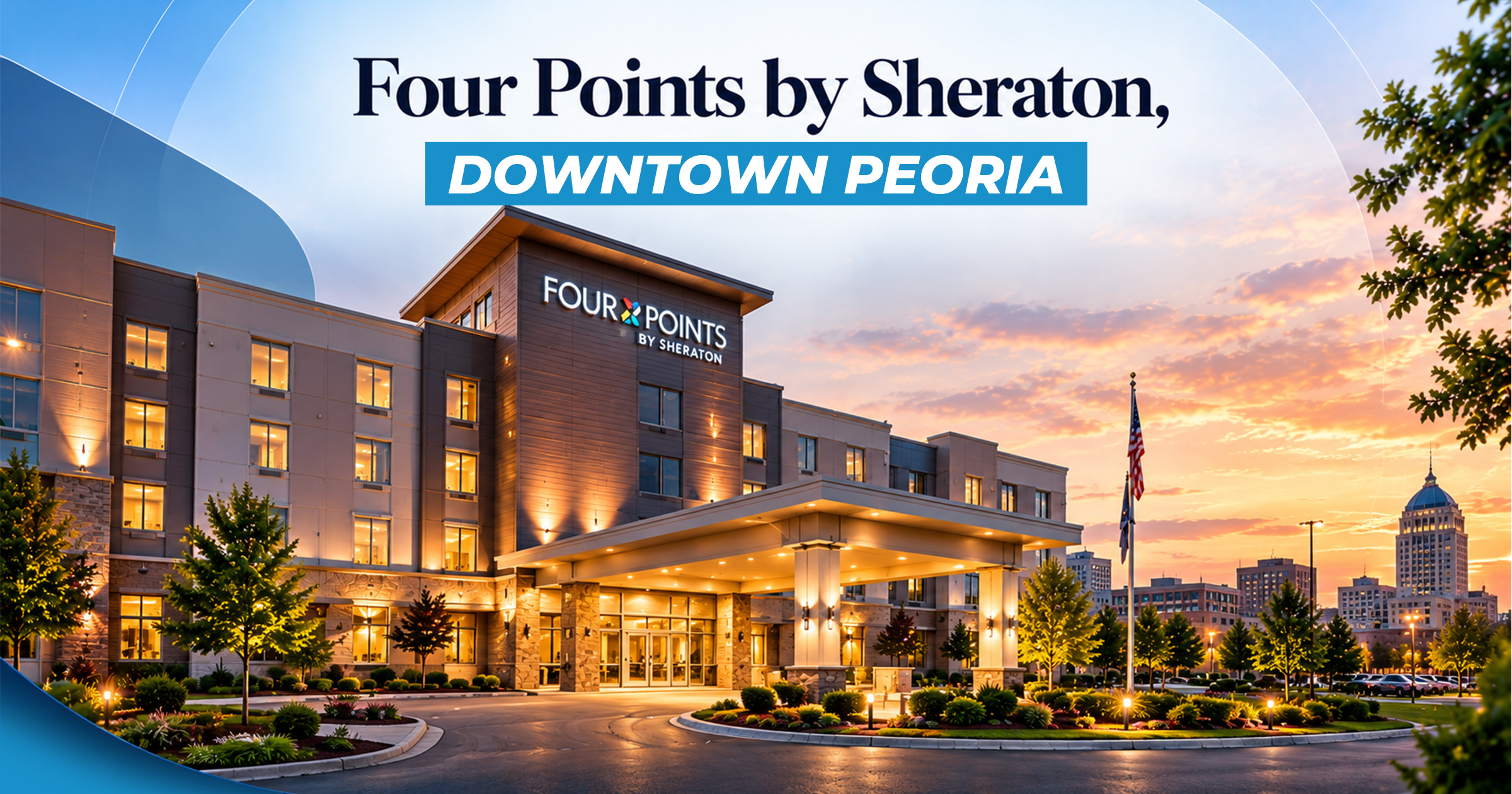
The Four Points by Sheraton in downtown Peoria, Illinois is a 323-room, full-service hotel operating under a Marriott brand. The hotel completed a $40 million renovation in 2020 and benefits from a central location with corporate and event-driven demand.
Vairt projects annual rental income of 7% to 9% during years one through five, paid to owners as monthly distributions. Over the five-year holding period, the property is also positioned for long-term appreciation potential. Owners don’t staff the hotel, manage bookings, or handle maintenance. The professional team runs every part of the operation.

Vairt’s commercial office and parking property in downtown Peoria combines about 68,360 square feet of office space with a seven-story parking deck of roughly 552 spaces, for a total of 272,876 square feet in the central business district.
Because the property earns income from two sources, office leases and parking revenue, Vairt projects annual rental income of 8% to 10% during years one through five, also paid as monthly distributions. Owners aren’t negotiating leases or running the parking operation. Those responsibilities stay with the professional team.
Projected figures are based on Vairt’s current estimates, and actual income follows each property’s performance.
Vairt’s other U.S. listings include V Resort Living in Sheridan, Illinois, a residential community with 332 residences across 165 acres; the Econo Lodge Inn & Suites in Triadelphia, West Virginia, a 113-room hotel with planned improvements; and the 5 Million Star Hotel in Pennsylvania, a 60-unit hospitality development built around dome-style accommodations.
Full property details, including projections, cost breakdowns, holding terms, and eligibility, are available to registered users. Creating a Vairt account takes just a few minutes and lets you compare all of Vairt’s current rental property opportunities side by side.
Want monthly rental income without the tenant calls, repairs, and vacancies? Schedule a free 15-minute call and we’ll walk you through how Vairt’s Peoria hotel and office properties distribute rental income to owners.
One common concern with rental property is how easy it is to get your money out. Selling a rental home directly can take months of listing, showings, and closing.
Vairt offers more flexibility. Its listings are designed around a five-year holding period, which gives each property time to build income and potential value. For owners who need to exit sooner, Vairt offers a 90-day exit option. Owners can also list their shares on a secondary market or call a vote among owners to sell the property. As with any real estate sale, pricing depends on market conditions at the time.
Fractional ownership removes the operational work, but you still choose which property fits your goals. Reviewing the location, property type, income model, projected figures, and holding period helps you make a confident decision. You can learn more about how Vairt selects properties on its property review process page.
Professionally managed fractional ownership is a strong fit for people who want monthly rental income potential but don’t want the responsibilities of being a landlord. It works especially well for busy professionals, people who live far from strong rental markets, and anyone interested in owning part of a hotel or commercial building rather than a single rental home.
It also suits people who are comfortable with a multi-year holding period and want to spread their capital across several properties over time. Those who enjoy hands-on property management, want full control over every decision, or plan to live in the property may prefer buying a rental directly.
To learn more about the team behind the platform, read Vairt’s story.
So how do you make money on rental property? Through cash flow, appreciation, equity buildup, and tax benefits. These four sources have made rental property one of the most popular paths to long-term wealth in the U.S. The challenge has always been the capital, time, and work required to own and manage a rental directly.
Professionally managed fractional ownership keeps the income potential and removes the landlord work. With Vairt, you can own part of properties like the Four Points by Sheraton and the downtown Peoria office and parking property, receive projected rental income as monthly distributions, and rely on experienced teams to handle operations.
When you’re ready to see real properties, create a Vairt account to unlock full details for every current listing.
You make money on rental property in four main ways: cash flow from rent after expenses, appreciation in the property’s value over time, equity built as the loan is paid down, and tax benefits such as depreciation and expense deductions. Most owners rely on a mix of these, earning income along the way and realizing appreciation and equity when the property is sold.
It depends on the property’s rent, expenses, financing, location, and occupancy. As an example, Vairt projects annual rental income of 7% to 9% for its Four Points by Sheraton hotel and 8% to 10% for its Peoria office and parking property in years one through five, paid monthly. Appreciation can add to an owner’s total gain when the property is sold.
Yes. Through professionally managed fractional ownership, you can own a share of a rental property while an experienced team handles tenants, guests, and maintenance. On Vairt, properties such as the Four Points by Sheraton and the Peoria office and parking property distribute projected rental income to owners monthly through their digital wallets.
Buying a rental property directly typically requires a down payment, closing costs, and cash reserves. Fractional ownership lowers the starting point considerably. Current listings on Vairt, including hotels, office, and residential properties, show a $25,000 minimum. Always confirm the minimum and eligibility on the specific property listing.
On Vairt, yes. Properties are designed around a five-year holding period, but Vairt offers a 90-day exit option for owners who want to exit sooner. Owners can also list their shares on a secondary market or call a vote among owners to sell the property, with pricing based on market conditions at the time.
No. Rental income depends on occupancy, rent levels, operating expenses, interest rates, and local market conditions. Projected figures, like the annual rental income ranges Vairt shares for each property, are a helpful way to compare options, and reviewing each property’s details, structure, and holding period helps you make an informed decision.

I'm Muhammad Waqas, a real estate content writer at Vairt with 8 years of experience writing about property ownership and real estate. I cover topics such as fractional real estate, hotel and commercial property ownership, and how to evaluate income-producing properties. My writing focuses on helping U.S. readers understand how professionally managed real estate works, including its benefits, risks, and structure, before they explore an opportunity.

Certain statements contained in this document constitute forward-looking statements. Such forward-looking statements, including our intended actions and performance objectives, projections, targets, estimates, or forecasts involve known and unknown risks, uncertainties and other important factors, including our ability to successfully develop and operate the Vairt Marketplace, our business model and the services we intend to offer. These factors are based on expectations and assumptions that may change and are subject to regulatory uncertainty, changes in our legal environment and the blockchain and real estate industries generally, which could cause our actual results, performance or achievements to differ materially from any future results, performance or achievements expressed or implied by such forward-looking statements. All amounts, numbers, ranges, and values presented in this document are subject to material change and should be taken as preliminary and indicative only. Any such amounts, numbers, ranges, and values are based upon preliminary estimates, remain subject to ongoing analysis and may change materially. All forward-looking statements in this document speak only as of the date hereof. We expressly disclaim any obligation to update any forward-looking statement to reflect any change in our expectation or any change in events, conditions, assumptions or circumstances.

_(1)_.jpg)


Comments