



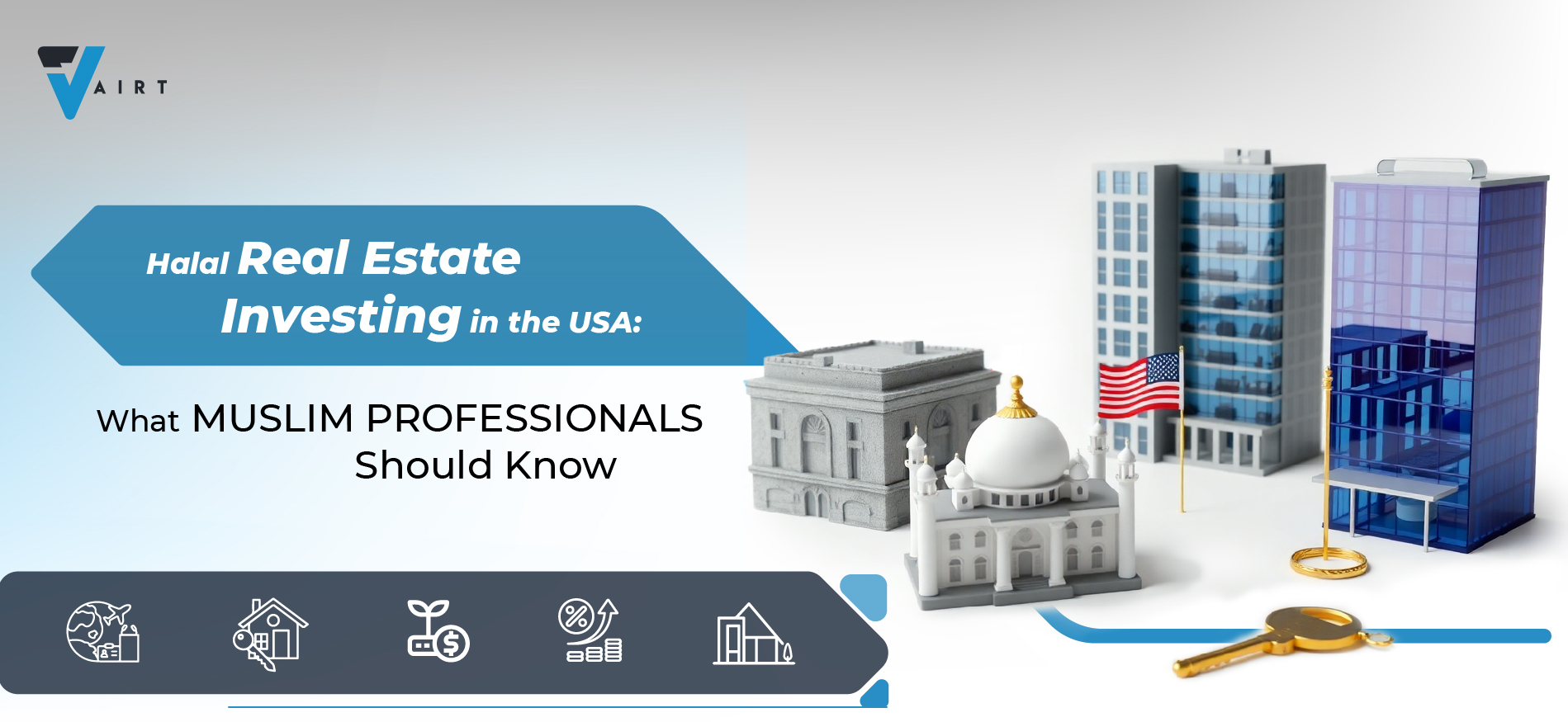
Many Muslim professionals in the USA earn well and save consistently, yet they often hesitate when it comes to investing. This hesitation stems from a desire to align financial decisions with Islamic principles. Concerns about interest-based financing, unclear ownership, and transparency prevent many from taking action, even when opportunities exist.
Halal real estate investing is defined by structure, clarity, and adherence to Islamic economic principles.
All returns must come from real economic activity rather than guaranteed interest-based income. Income may include rent, profit-sharing, or capital appreciation.
Investors must hold clear legal and economic ownership of real property. This ensures they participate in actual asset growth rather than speculative or synthetic returns.
Contracts, fees, risks, and income sources should be fully disclosed. Ethical practices, clarity, and fairness are essential in halal investing.
Real estate is a tangible, asset-backed investment that can produce income without interest. Rental income and asset appreciation reflect real economic activity. When structured correctly, real estate aligns naturally with Shariah principles, making it a preferred option for Muslim investors.
Before committing capital, Muslim professionals often evaluate critical aspects of investments:
Verify whether any portion of financing relies on conventional loans or fixed interest returns.
True halal investment requires legal and economic ownership, not just profit-sharing.
Understand who manages the asset, how decisions are made, and how disputes are resolved.
Halal investing requires fair risk-sharing. Investors should understand market, operational, and vacancy risks.
Returns in halal real estate investing are generated through the productive use of property, such as rental income or capital gains. The key distinction is that income comes from property utilization rather than interest-based lending, ensuring compliance with Islamic principles.
Avoid interest-bearing debt, guarantee no fixed returns, and ensure clear ownership.
Know the property type, location, income source, and operational plan.
Understand all potential risks, including market fluctuations and operational challenges.
Ensure clarity on liquidity, resale, and ownership transfer conditions.
The halal investing space is growing in the USA, but not all offerings meet Shariah standards. Muslim professionals benefit most from education-first approaches, enabling informed decision-making and reducing risk exposure.
Halal real estate investing is not only about financial returns. It also reflects a commitment to ethical wealth creation, responsible ownership, and long-term planning. Properly structured investments allow Muslim professionals to participate in economic growth while adhering to Islamic values.
Halal real estate investing in the USA offers Muslim professionals a pathway to build wealth without compromising their faith. Success requires careful evaluation, transparent structures, and Shariah-compliant practices. With education and clarity, Muslim investors can make informed decisions that balance financial growth and ethical responsibility.
Q1: What qualifies as halal real estate investing in the USA?
A: Halal real estate investing involves ownership of tangible property, income generated from productive use rather than interest, and transparent, ethical investment structures.
Q2: Can I invest in REITs and still comply with Shariah principles?
A: Some REITs may qualify if they meet debt and interest limits, and their income is derived from permissible activities. Careful Shariah screening is necessary.
Q3: How can Muslim professionals ensure transparency in real estate investments?
A: Look for clear contracts, legal ownership documentation, fully disclosed income sources, and clear reporting of operational activities.
Q4: Is real estate the only halal investment option?
A: No. Muslim investors can also explore Shariah-compliant stocks, ETFs, mutual funds, and other asset-backed investment vehicles. Real estate is preferred for tangible, asset-backed income.
Q5: How do I start halal real estate investing in the USA?
A: Begin with education. Understand Shariah-compliant structures, evaluate opportunities, and consider professional advisory services that specialize in halal real estate investments.

Hassan is a financial writer at Vairt, specializing in halal investing and ethical wealth management. He simplifies complex financial topics to help Muslim investors explore Shariah-compliant opportunities in real estate, stocks, gold, and more. His goal is to empower readers with clear, practical insights for confident and long-term wealth building.


Certain statements contained in this document constitute forward-looking statements. Such forward-looking statements, including our intended actions and performance objectives, projections, targets, estimates, or forecasts involve known and unknown risks, uncertainties and other important factors, including our ability to successfully develop and operate the Vairt Marketplace, our business model and the services we intend to offer. These factors are based on expectations and assumptions that may change and are subject to regulatory uncertainty, changes in our legal environment and the blockchain and real estate industries generally, which could cause our actual results, performance or achievements to differ materially from any future results, performance or achievements expressed or implied by such forward-looking statements. All amounts, numbers, ranges, and values presented in this document are subject to material change and should be taken as preliminary and indicative only. Any such amounts, numbers, ranges, and values are based upon preliminary estimates, remain subject to ongoing analysis and may change materially. All forward-looking statements in this document speak only as of the date hereof. We expressly disclaim any obligation to update any forward-looking statement to reflect any change in our expectation or any change in events, conditions, assumptions or circumstances.
Comments