

Most people can't write a check for an entire hotel or office building. Even a single rental house can mean a large down payment, a mortgage, and years of tenant calls, repairs, and vacancies.
Partial property ownership offers another way in. You hold a proportional share of a specific property alongside other owners, and a professional team handles day-to-day operations.
Real estate platforms have made this model much easier to access. You don't have to assemble a group of co-owners, negotiate a purchase, or hire a property manager yourself. You review properties online, choose one that fits your goals, and own a defined share of the legal entity that holds it.
This guide covers how that process works, what you actually own, where income comes from, how exits work, and which risks to understand first. It uses Vairt, a U.S.-focused platform for professionally managed real estate, as a working example.
Not sure which approach fits your goals? Schedule a free 15-minute call and we'll walk you through how partial ownership works on Vairt and which current properties may fit your plans.
Partial property ownership is an arrangement where several people each own a percentage of one property instead of one person owning all of it. Each owner's share of income, appreciation, and costs generally matches their percentage.
You'll also see it called fractional property ownership, fractional real estate, shared property ownership, or co-owned real estate. The names differ, but the idea is the same: the cost of a property is divided among many owners.
Two common points of confusion:
It is not a timeshare. A timeshare usually gives you the right to use a vacation property for set periods. Partial ownership through a platform gives you an economic interest in the property's income and value. It does not give you the right to stay there.
It is not the same as a REIT. A real estate investment trust typically holds a large portfolio, and you buy shares in the company. With partial ownership on a platform, you usually choose a specific property and own part of the entity that holds that one asset.
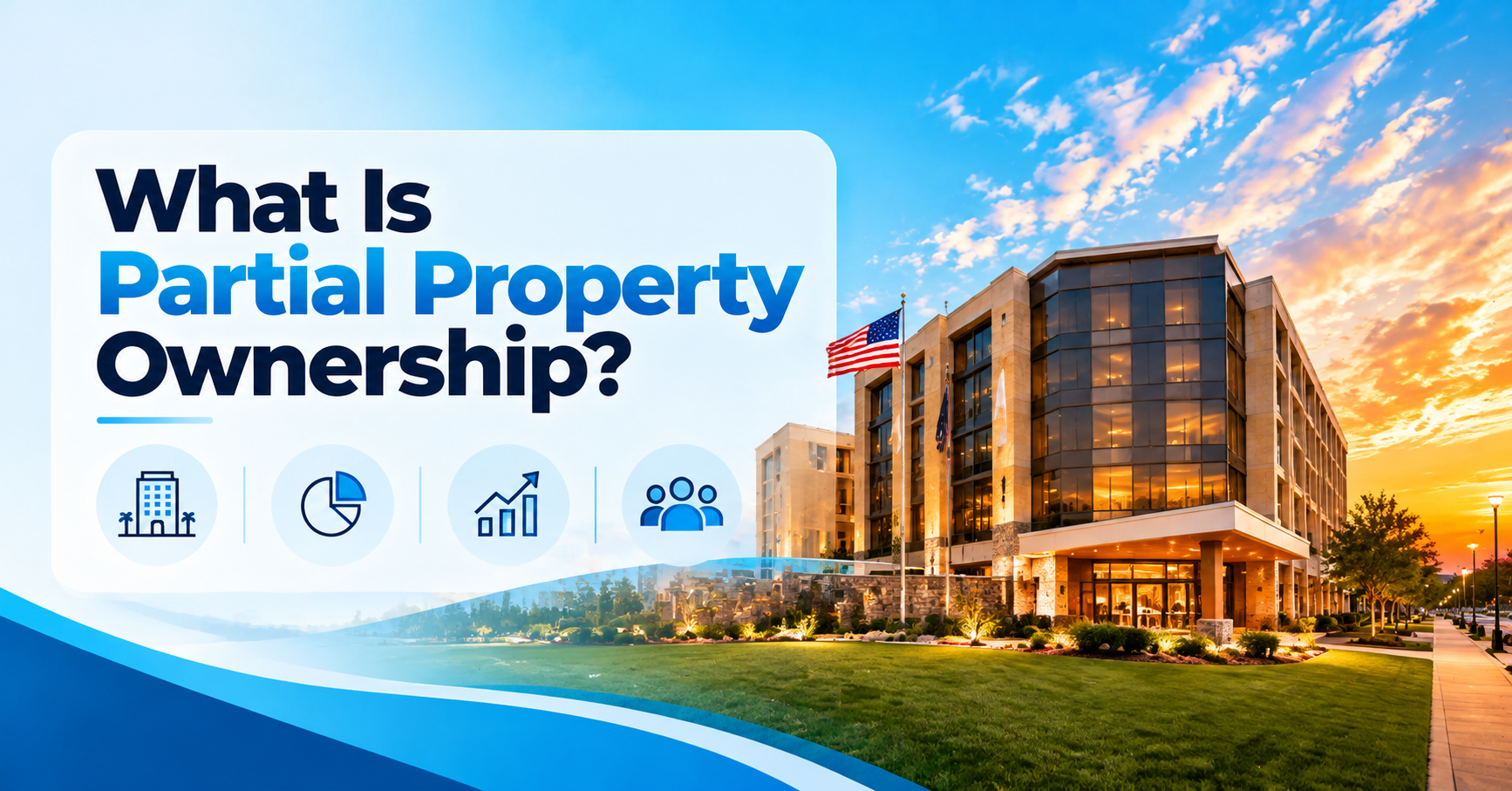
A platform finds and screens a property, then collects commitments from many participants. When the property is fully funded, a legal entity buys it, each participant receives a proportional share of that entity, and a management team runs the property.
The details vary by platform. The general sequence looks like this.
The platform's team identifies properties, reviews financials and market conditions, and decides which ones to list. This step matters because it replaces the deal-hunting an individual buyer would normally do alone.
Vairt describes using a 100-point screening process for each property and a third-party evaluator to support its assessment. You can read how that works on Vairt's How It Works page.
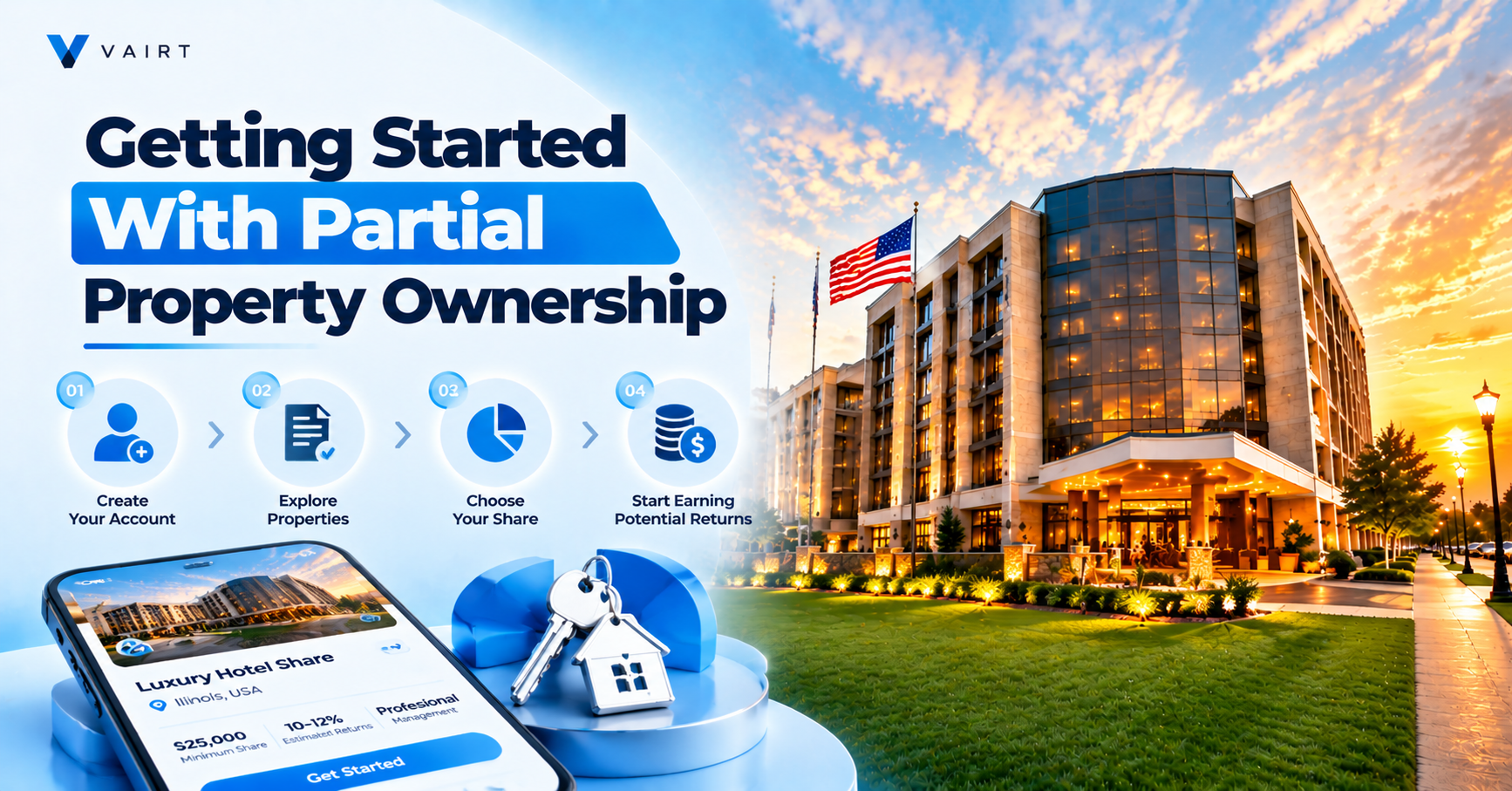
Each listing shows the property type, location, costs, and projected figures. You decide which property fits your goals and how much of it you want to own, above the platform's minimum.
Participants commit funds during a set window. On Vairt, properties are listed for 30 days. If a property isn't fully funded at that time, Vairt says committed amounts are returned to the participant's digital wallet at no cost. Participant funds are held in escrow during this stage.
This is the core of the structure. A property-specific LLC (sometimes called a special purpose vehicle, or SPV) is a legal entity created to own one property. Participants own the LLC, and the LLC owns the real estate.
Once a property is fully funded, Vairt forms an LLC for it in the relevant state. The LLC is divided into one million shares, and each participant's shares match their contribution.
After the purchase, a management team handles maintenance, leasing or guest operations, vendors, and reporting. This is what makes the model "passive" for owners: you are not the one answering maintenance requests or chasing rent.
When the property produces distributable income, owners receive their proportional share. On Vairt, rental income is transferred to your digital wallet, where you can withdraw or reinvest it. Owners can follow property updates through Vairt's website and mobile app.
Most partial ownership structures assume a multi-year holding period, and the exit terms vary. We cover exits in more detail below.
Not sure which approach fits your goals? Schedule a free 15-minute call and we'll walk you through how partial ownership works on Vairt and which current properties may fit your plans.

You own shares in the legal entity that holds the property, not a physical piece of the building. Those shares entitle you to a proportional share of the property's net income and of its sale proceeds, subject to the entity's governing documents.
A simple, hypothetical illustration: if you hold 2% of an LLC's shares, you would generally be entitled to 2% of the income that LLC distributes and 2% of the net proceeds if the property is sold.
The LLC structure also separates each property from the others. Your ownership in one property doesn't depend on how a different property on the same platform performs.
Ownership rights differ by platform, so check what decisions owners can influence. On Vairt, owners can call a vote among themselves to sell the entire property. Day-to-day decisions stay with the management team.
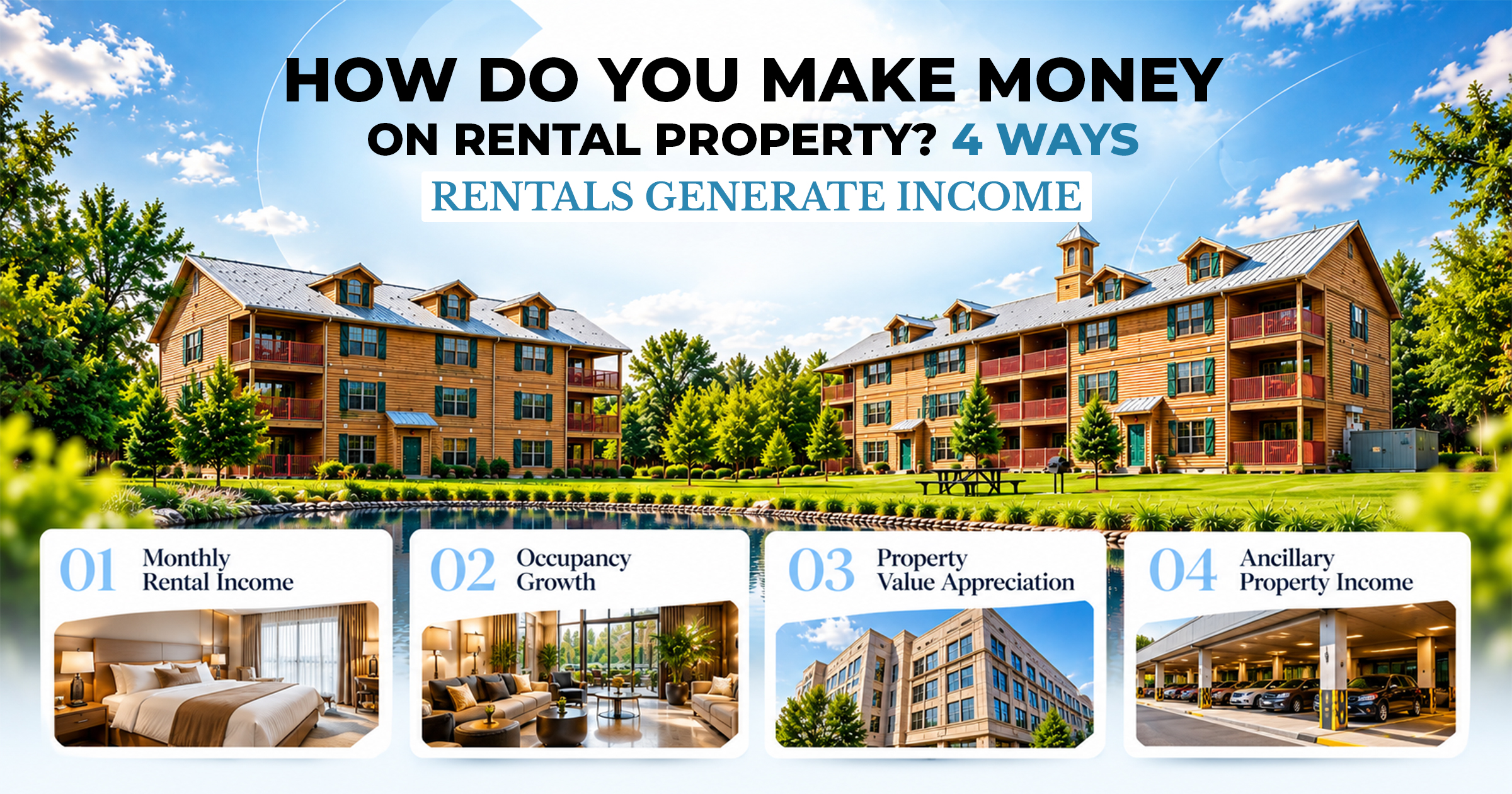
Income comes from the property's operations. For a rental property, that means rent. For a hotel, it means room revenue and related income. For a commercial building, it may be leases, parking, or both.
Owners don't receive gross revenue. Before anything is distributed, the property pays its costs, which can include:
Operating expenses and staffing
Property management and platform fees
Maintenance, repairs, and capital reserves
Taxes and insurance
Loan payments, if the property uses financing
What's left is distributable income, and it varies with property performance.
There is also a second potential source of value: appreciation, or growth in the property's value over time. You usually realize appreciation when the property is sold or when you sell your shares. Neither income nor appreciation is guaranteed.
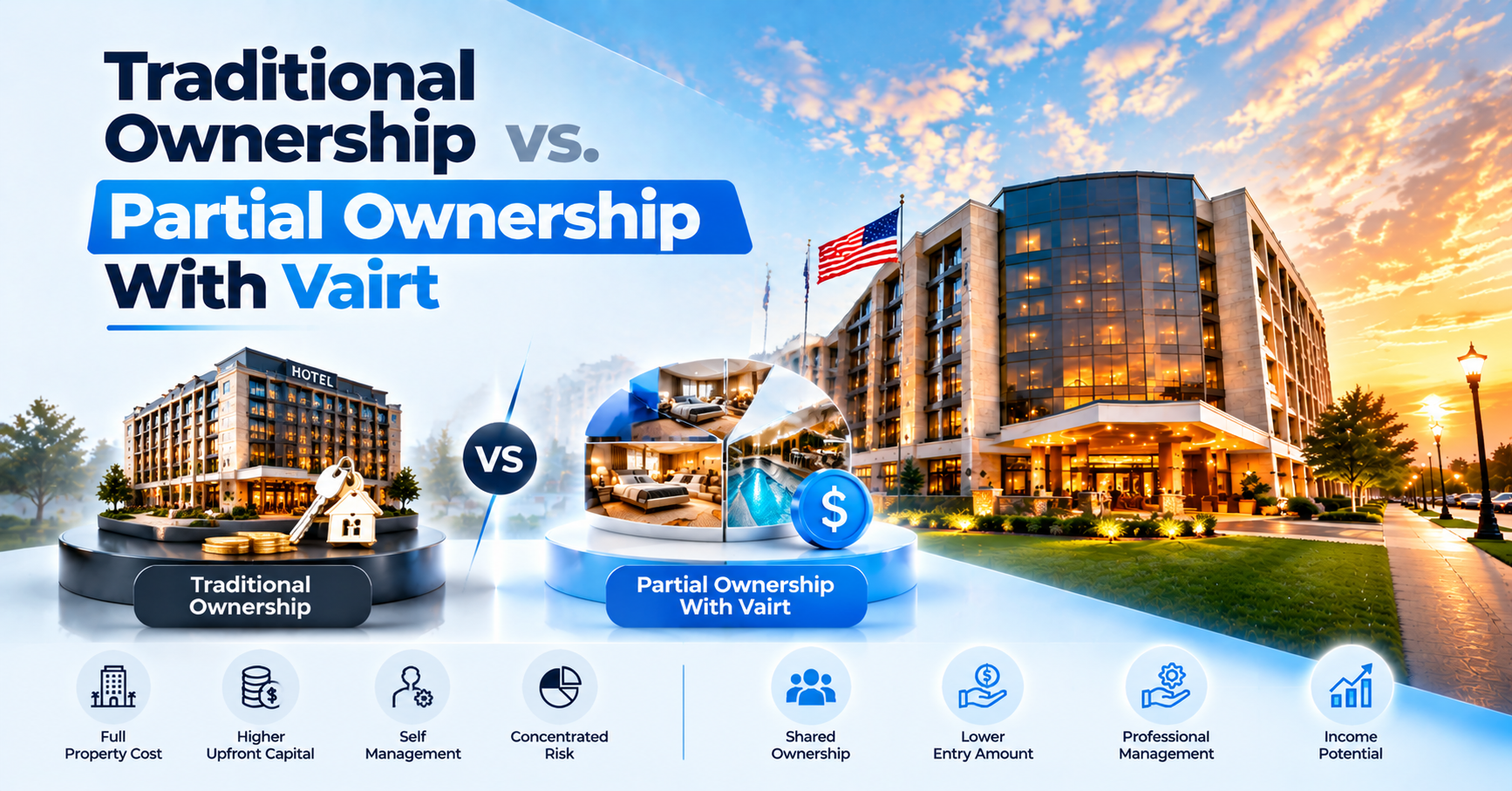
The biggest difference is where your time and capital go.
|
Buying a Property Yourself |
Partial Ownership With Vairt |
|
|
Capital needed |
Down payment plus closing costs on the full property |
A chosen amount above the platform minimum |
|
Finding deals |
You search, analyze, and negotiate |
The platform sources and screens |
|
Management |
You or a manager you hire and oversee |
Handled by a professional team |
|
Control |
Full control of decisions |
Limited to what the structure allows |
|
Property types |
Usually what one buyer can afford |
Can include hotels and commercial buildings |
|
Selling |
You sell the whole property |
Sell shares or join an owner vote, per the terms |
Direct ownership looks like this: buy, repair, lease, manage, collect, maintain, sell. Partial ownership through a platform looks more like this: review, choose, own, monitor.
The tradeoff is control. You give up the ability to make every decision, and in return you don't carry the operational workload.
A current listing shows how this works in practice.
The Four Points by Sheraton in downtown Peoria, Illinois is a 323-room, full-service hotel operating under a Marriott brand. Vairt describes the property as fully renovated and positions it for both monthly income potential and long-term appreciation potential. The listed minimum is $25,000.
Buying a hotel like this usually requires a large capital commitment and hospitality expertise. Through partial ownership, a participant holds a share of the ownership entity, and hotel operations stay with professionals. That includes staffing, bookings, housekeeping, maintenance, and brand standards.
The same model applies to other property types. Vairt also lists a commercial office and parking property in downtown Peoria, and a 60-room hotel, the Marifah Inn, in Williamsburg, Iowa, both with $25,000 minimums.
Before committing to any property, review its projected figures, costs, holding expectations, and terms on the listing. Some listings on Vairt are limited to certain participant categories, so check eligibility too. You can compare Vairt's current real estate opportunities side by side.
Partial property ownership is generally a multi-year commitment. Vairt recommends a holding period of five years.
Exit options are one of the most important terms to understand before you commit. On Vairt, there are two routes:
List your shares on a secondary market. Another participant may buy them from you. Whether and when that happens depends on buyer demand and pricing.
Call an owner vote to sell the property. If owners agree to sell, sale proceeds are divided according to each owner's shares after costs.
Neither route guarantees a sale on a specific timeline or at a specific price. Plan to hold for the full expected period, and treat early exit as possible rather than certain.
Passive real estate is not risk-free real estate. "Passive" means you're not doing the operational work. The property itself still carries the usual real estate risks, including:
Occupancy and revenue. Fewer tenants or guests means less income.
Expenses. Repairs, insurance, taxes, and labor costs can rise.
Interest rates. Higher rates can affect financing costs and property values.
Local market conditions. Demand in a specific city or neighborhood can change.
Operational performance. Results depend on the management team's execution.
Economic conditions. Recessions can hit hotels and commercial properties especially hard.
Property value. Values can go down as well as up.
Limited liquidity. Selling shares may take time, or may not be possible when you want.
Limited control. You rely on the platform and operator for most decisions.
These risks are the reason property review matters. A transparent platform should explain how it evaluates properties and what could affect their results. Vairt outlines its screening approach on its property review process page.
Not all real estate ownership platforms are structured the same way. Before choosing one, get clear answers to these questions:
How are properties sourced and screened, and is there independent valuation?
What legal entity holds the property, and what exactly do owners receive?
What fees apply, and are projections shown before or after them?
How and how often is income distributed?
What is the expected holding period?
What exit options exist, and what limits apply?
What happens if a property doesn't get fully funded?
What reporting and documents can owners access?
Who operates the property day to day?
This approach tends to fit people who:
Want real estate exposure without becoming a landlord
Are interested in hotels or commercial property but can't buy an entire building
Want to spread their capital across more than one property
Are comfortable holding for several years
Would rather review property details than manage operations
It may not fit people who:
Need quick access to their money
Want full control over every property decision
Want to live in or use the property
Are uncomfortable with income that varies with performance
Being honest about this before you commit leads to a better experience.
If the cost of buying an entire property, or the work of managing one, has kept you out of real estate, partial property ownership offers another route. You hold a proportional share of a specific property through a legal entity, while professionals handle tenants, guests, maintenance, and operations.
The structure only helps if the property is sound, so do the review first. Look at the property itself, the ownership structure, the income model, the fees, the holding period, and the exit terms, and then decide whether it fits your goals.
To see what's available now, review Vairt's current properties, and create an account when you're ready to see full property details.
Not sure which approach fits your goals? Schedule a free 15-minute call and we'll walk you through how partial ownership works on Vairt and which current properties may fit your plans.
Yes, but in a specific form. With partial property ownership through a platform, you typically own shares of a property-specific LLC, and that LLC owns the real estate. Your shares entitle you to a proportional share of distributable income and sale proceeds under the entity's terms. You generally don't hold a deed in your own name or have the right to use the property.
It depends on the platform and the property. Minimums range from a few hundred dollars on some platforms to tens of thousands on others, particularly for commercial real estate. Current listings on Vairt, including hotel and commercial properties, show a $25,000 minimum. Always confirm the minimum and any eligibility requirements on the specific property listing.
No. In professionally managed partial ownership, operations are handled by the management team. That includes leasing, guest services, maintenance, repairs, and vendors. Your role is to review the property, decide whether to participate, and monitor updates and income. Passive refers to your workload, not the property's risk level.
Possibly, but it isn't guaranteed. Many platforms offer some form of early exit. On Vairt, owners can list their shares on a secondary market or call a vote among owners to sell the entire property. Whether a sale happens, and at what price, depends on buyer demand, owner votes, and market conditions.
No. Income depends on occupancy, revenue, operating expenses, financing costs, local demand, and the terms of the specific property. Projected figures help you evaluate a property, but they are estimates, not promises. Property values can also decline, which affects what owners receive at sale.
With partial ownership through a platform, you usually choose a specific property and own shares of the entity that holds it. With a REIT, you own shares of a company that holds many properties, and publicly traded REIT shares can typically be sold on a stock exchange. Partial ownership offers more property-level choice, while public REITs usually offer easier liquidity.
On many platforms, the purchase doesn't go ahead and committed funds are returned. On Vairt, properties are listed for 30 days. If a property isn't fully funded in that window, committed amounts are refunded to the participant's digital wallet at no cost, where they can be withdrawn or used for another property.

I'm Muhammad Waqas, a real estate content writer at Vairt with 8 years of experience writing about property ownership and real estate. I cover topics such as fractional real estate, hotel and commercial property ownership, and how to evaluate income-producing properties. My writing focuses on helping U.S. readers understand how professionally managed real estate works, including its benefits, risks, and structure, before they explore an opportunity.

Certain statements contained in this document constitute forward-looking statements. Such forward-looking statements, including our intended actions and performance objectives, projections, targets, estimates, or forecasts involve known and unknown risks, uncertainties and other important factors, including our ability to successfully develop and operate the Vairt Marketplace, our business model and the services we intend to offer. These factors are based on expectations and assumptions that may change and are subject to regulatory uncertainty, changes in our legal environment and the blockchain and real estate industries generally, which could cause our actual results, performance or achievements to differ materially from any future results, performance or achievements expressed or implied by such forward-looking statements. All amounts, numbers, ranges, and values presented in this document are subject to material change and should be taken as preliminary and indicative only. Any such amounts, numbers, ranges, and values are based upon preliminary estimates, remain subject to ongoing analysis and may change materially. All forward-looking statements in this document speak only as of the date hereof. We expressly disclaim any obligation to update any forward-looking statement to reflect any change in our expectation or any change in events, conditions, assumptions or circumstances.
.jpg)

_(1)_.jpg)
Comments